Welcome to Freq Link, the leading platform that directly connects you to the latest satellite channel frequencies and the secrets of perfect reception in a world that renews daily with new channel launches and continuous updates on satellites. We are here to be the smart link between you and a strong signal with crystal-clear picture, through professional content that combines technical precision with ease of application—whether you’re searching for an exclusive sports channel, a high-definition movie bouquet, or live global news from reliable sources.
What distinguishes Freq Link is our commitment to providing instantly updated frequency links, supported by practical tips and accurate coverage maps for major satellites such as Nilesat, Arabsat, Hotbird, Astra, and Eutelsat, enabling you to add any channel quickly and stably no matter your geographic location. Join us on this daily journey toward better reception, and discover how a simple adjustment can open up a vast world of high-quality entertainment and knowledge for you.
Welcome to Freq Link, the advanced gateway that connects you directly to everything new in the world of satellite frequencies in a professional and straightforward way. We combine instant updates with precise guidelines to ensure perfect reception for you, no matter how conditions change or technologies evolve. In every article, we take you on a comprehensive tour of a carefully selected channel, focusing on providing reliable frequency links and practical tips that turn any ordinary receiver into a complete entertainment center meeting your daily needs.
Join us in this unique experience that brings the world of satellites closer to you than ever before, with broad coverage of major satellites such as Nilesat, Arabsat, Hotbird, Astra, and Eutelsat, along with everything new in high-definition broadcasting. Freq Link is not just a website; it’s a vital lifeline supplying you with the strong signal and rich content you deserve—get ready to discover a new channel waiting for you behind the next link!
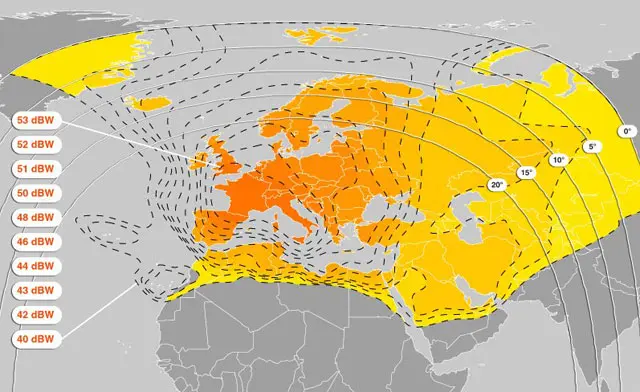
Hotbird is one of the most widely used communication satellites for broadcasting television and radio channels across Europe, the Middle East, and parts of North Africa.
Since its launch in 1995, the Hotbird satellite fleet has played a significant role in providing a wide variety of content, including free-to-air, subscription-based channels, and internet services.
With its strategic orbital position and advanced technology, Hotbird has established itself as a leader in the satellite broadcasting industry.
🚀 On the subject of Hotbird
Hotbird is operated by Eutelsat, one of the world’s leading satellite operators. The Hotbird satellite fleet consists of multiple satellites, such as Hotbird 13C, Hotbird 13B, and Hotbird 13E, which are positioned at 13° East longitude. This prime location allows Hotbird to provide coverage across large parts of Europe, the Middle East, and North Africa.
Hotbird offers an extensive array of services, including:
-
Television channels: A variety of TV channels, including news, sports, entertainment, and educational programming.
-
Radio broadcasting: Both FM and satellite radio services.
-
Data and internet services: Reliable internet and communication links for businesses and individuals.
-
Corporate communications: Private communication channels for corporate and government use.
🌐 Hotbird’s Satellite Fleet
The Hotbird fleet includes several satellites positioned in the same orbital slot at 13° East, which gives it an exceptional ability to serve a large area of coverage.
Key satellites in the Hotbird fleet include:
-
Hotbird 13B
-
Hotbird 13C
-
Hotbird 13E
-
Hotbird 13F (Upcoming)
These satellites are equipped with high-powered transponders that deliver a wide range of services across the broadcast and telecommunication sectors.
🛰️ Frequencies and Services on Hotbird
Hotbird offers services through several frequency bands, including the Ku-band and Ka-band. These frequencies are used for different purposes:
-
Ku-band: The most common frequency for satellite TV and radio services. It offers high-quality transmission with smaller dishes and supports high-definition (HD) channels and internet services.
-
Ka-band: Used for high-capacity data services and satellite internet, offering faster speeds and lower latency.
Hotbird’s wide range of frequencies enables users to access hundreds of television channels, radio stations, and internet services across a broad area.
📡 How to Receive Hotbird Signals
To receive signals from the Hotbird satellite, users need a satellite dish that is properly aligned to the 13° East orbital position. The dish should be connected to a compatible receiver, which will allow the user to tune in to the correct frequencies.
Common Hotbird Frequencies:
-
Hotbird 13C Frequency:
-
Frequency: 11.647 GHz (Horizontal)
-
Symbol Rate: 27500
-
FEC: 3/4
-
-
Hotbird 13B Frequency:
-
Frequency: 12.722 GHz (Vertical)
-
Symbol Rate: 27500
-
FEC: 3/4
-
These frequencies are used for a variety of services, including satellite TV channels, radio stations, and data transmission.
For precise information on the frequencies and satellite settings, FreqSatellite is an excellent resource that provides updated details for users looking to tune their satellite systems to Hotbird’s services.
Hotbird is a major player in satellite broadcasting, offering wide-reaching coverage and reliable services across Europe, the Middle East, and North Africa. Its fleet of satellites provides a broad range of services, including television, radio, internet, and data transmission, making it a key player in the communication industry.
If you are looking to set up a satellite system to receive Hotbird signals or need the latest frequency updates, FreqSatellite offers the most comprehensive guides and settings for all your satellite needs.
In conclusion, after this exciting journey through the channel’s frequencies and the secrets to receiving it in superior quality, Freq Link takes pride in being the bridge that directly connects you to the best satellite broadcasting has to offer—rich, diverse content. Every piece of information shared here has been carefully selected to be your next step toward a stronger signal, clearer picture, and a viewing experience that exceeds expectations, regardless of weather challenges or geographic location.
We thank you for choosing Freq Link as your daily companion in the world of frequency links, and we reaffirm our commitment to providing instant updates and continuous support. If you need any help with practical application or face a technical challenge, our team is ready to respond quickly via the “Contact Us” page.
Additional Professional Tips for Long-Lasting Reception:
- Record the signal values (Signal Strength & Quality) after successful alignment so you can compare them later and identify any changes that need correction.
- Use a reliable DiSEqC switch (preferably 1.2) if receiving from multiple satellites, to ensure smooth, loss-free transitions between signals.
- In areas with high interference, try adding an LTE (4G/5G) filter between the LNB and receiver to purify the signal from modern noise.
- Install the dish away from growing trees or new buildings, leaving a safe clearance to avoid future obstructions.
- Perform a full Blind Scan at least every two months, as new channels or bouquet changes can appear without prior announcement.
Stay connected with Freq Link, because every new link opens up a world of high-quality entertainment for you. Enjoy strong signal and crystal-clear viewing always!